
The World's Best Tourism Village
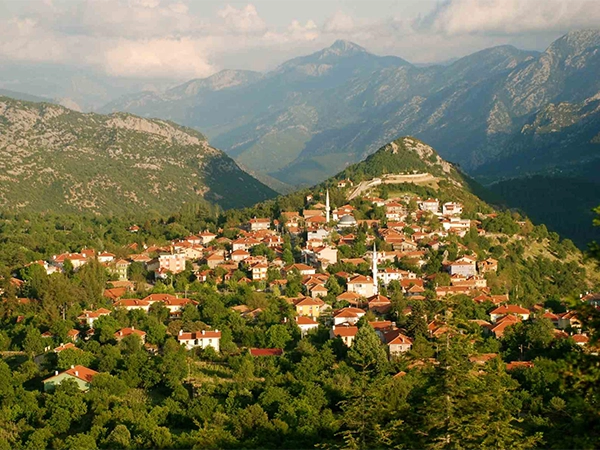
Ormana is an old Yörük village in the Taurus Mountains, approximately 950 metres above sea level, tucked between the streams that feed the Manavgat River and enclosed on all sides by forest. Its permanent population is around 600. In 2024, the UN World Tourism Organisation placed Ormana on its Best Tourism Villages list — one of the world's most prestigious recognitions for rural tourism destinations, a list that already included Turkish villages such as Mustafapaşa, Taraklı, Birgi, and Şirince.
The recognition reflects Ormana's rare combination of preserved architectural heritage — its famous düğmeli evler — a 57-year tradition of harvest festivals, the ruins of the ancient city of Erymna beneath its streets, the wild horses of the nearby Eynif Plain, and a community that has chosen conservation over demolition when the two were in conflict.
Düğmeli Evler: No Nails, No Mortar, Centuries Standing
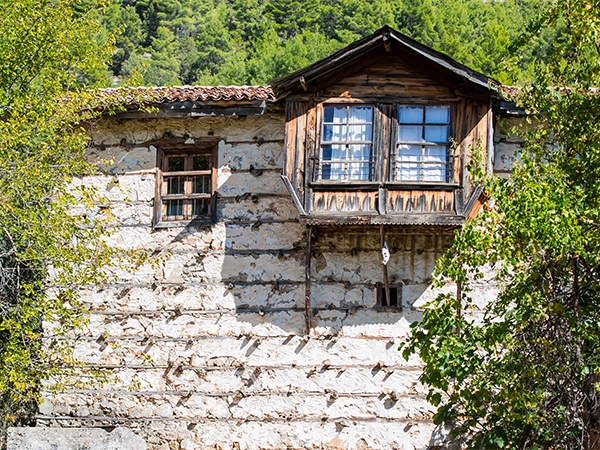
The village is best known for its düğmeli evler — buttonhouses — a construction technique found nowhere else in Turkey. The buildings are assembled entirely from Taurus cedar timber frames and dry-stacked stone, without mortar, cement, or nails of any kind. The wooden beams run horizontally through the walls as structural reinforcement; where they protrude from the exterior surface, they resemble buttons — hence the name. In local architectural terminology the technique is called pişduvan or hatıllı kuru duvar.
Wall thickness ranges from 70 centimetres to 1.2 metres, providing natural insulation against Taurus winters and substantial earthquake resistance. Despite being built without binding agents, most of the surviving structures are between 150 and 300 years old and still standing without significant structural intervention. Interior spaces are almost entirely wooden, including carved ceiling and wall details that have retained their character across the centuries — and the smell of cedar fills every room.
Around 300 düğmeli evler remain in Ormana. Approximately 50 have been restored, with several converted into boutique hotels and pansiyons offering around 80 rooms and 170 beds. Restorations are carried out by craftspeople trained from within the local community and must conform to the original technique — a requirement that protects the heritage and creates local employment simultaneously. The village received Kültür Köyü status in 2012 through the Çekül Foundation's Historic Towns Network, which provided the legal protection needed to prevent further demolition.
Erymna Ancient City
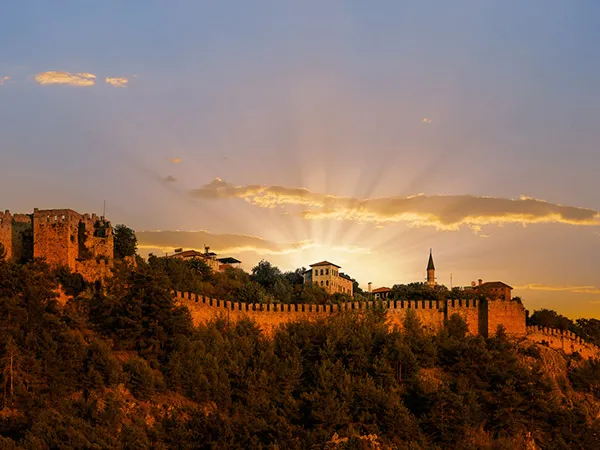
Ormana was not built on empty ground. Between Ormana and the nearby village of Unulla, on a hilltop, lie the ruins of the ancient city of Erymna — known in ancient Greek times as Orymna. Tower and fortification wall remains are still visible, as are traces of the historic Silk Road caravan route that once passed through this region.
The Region's Other Treasures
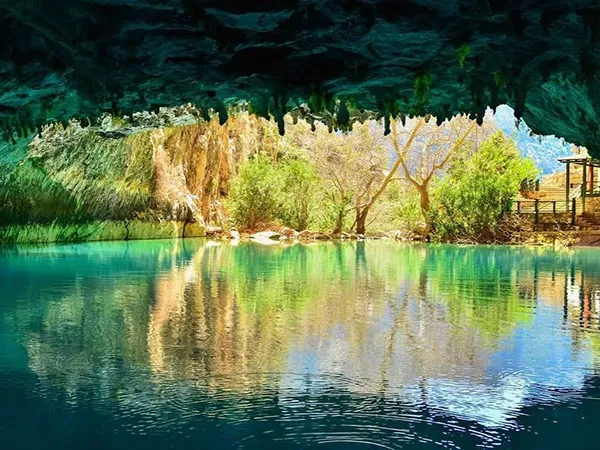
Altınbeşik Cave, 7 to 8 kilometres from the village, is one of the world's rare river caves accessible only by boat from inside — visitors paddle through the cave on a river that flows through it. It is on Turkey's Tentative List for UNESCO World Heritage designation. The Eynif Plain, a 90,000-decare natural plateau, is home to approximately 800 wild horses living in family herds alongside locally owned livestock. The plain also contains the ruins of the Tol Han caravanserai on the historic caravan route. An 1,100-year-old monumental chestnut tree completes the list of things in this area that deserve more attention than they get.
Practical Information
- Location: Ormana district, İbradı, Antalya. 170 km from Antalya city centre, 60 km from Manavgat.
- Getting there: By private car approximately 2.5 hours from Antalya, 2 hours from the airport. Two routes available: via Oymapınar Dam or via Akseki. Minibus service from Antalya bus terminal to Ormana; journey takes 4 to 5 hours due to intermediate stops.
- Accommodation: 7 boutique hotels and various pansiyons in restored düğmeli evler. Staying at least one night is strongly recommended.
- Entrance fee: Free.
- Best time to visit: Spring and autumn. The Traditional Grape Festival runs late August to early September; the Artoros International Culture and Arts Festival takes place in September.
- Combine with: Altınbeşik Cave, Eynif Plain, and Erymna Ancient City — allow at least two days.