
A Building Tradition Found Nowhere Else
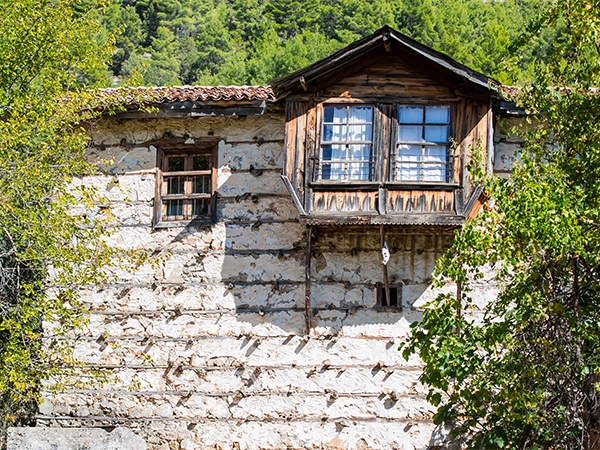
The düğmeli evler — literally "buttoned houses" — are a vernacular architectural tradition unique to the Akseki and İbradı districts of the Antalya province and their surrounding villages. No equivalent technique has been documented anywhere else in Turkey.
The construction method combines a structural timber frame of Taurus cedar with dry-stacked stone infill, assembled without mortar, cement, or nails. The horizontal timber beams — hatıl — run through the wall and project slightly on the exterior surface. These projecting ends, which resemble buttons on the face of the wall, give the buildings their name. In local terminology, the technique is called pişduvan or hatıllı kuru duvar.
Wall thicknesses range from 70 centimetres to 1.2 metres. Despite the absence of binding materials, buildings constructed this way have survived for 150 to 300 years. The interior timber — carved ceilings, wall panels, and stairways — has preserved its detailing across the centuries.
Where to See Them
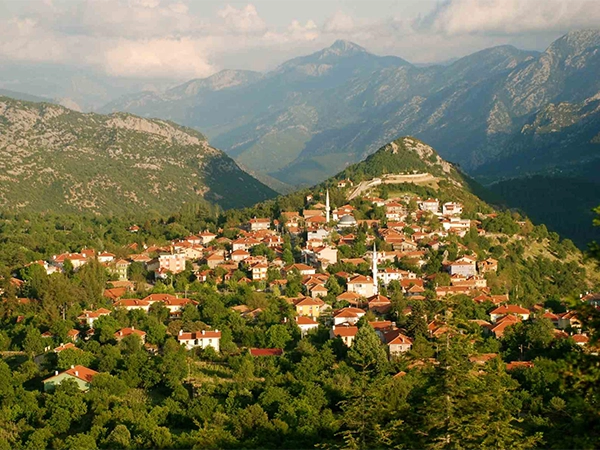
The finest and most concentrated examples are in Ormana village, where approximately 300 remain standing. Ürünlü village, 7 kilometres from Ormana, consists almost entirely of düğmeli evler and has the atmosphere of an open-air museum in which time has genuinely stopped. Sarıhacılar village sits on the old Roman and Seljuk caravan road, with intact stretches of the caravan route still visible and a 400-year-old mosque with notable wooden interior carving. Cevizli village has the distinction of being the first village in Turkey to be given an urban plan during the early Republican period.
Practical Information
- Location: Akseki and İbradı districts and surrounding villages. Best examples in Ormana, Ürünlü, and Sarıhacılar.
- Getting there: By private car from Antalya via the Akseki or Manavgat–İbradı route. Minibus from Antalya bus terminal to Ormana.
- Entrance fee: Villages and exterior of buildings free. Some restored buildings operating as museums may charge entry.
- Best time to visit: Spring and autumn; late August for the Grape Festival.
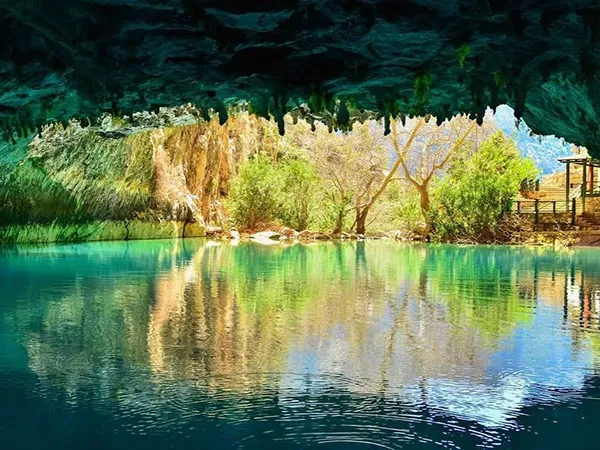
- Combine with: Ormana village, Altınbeşik Cave, Eynif Plain, and Erymna Ancient City.