
The Medieval Fortress That Never Stopped Being Lived In
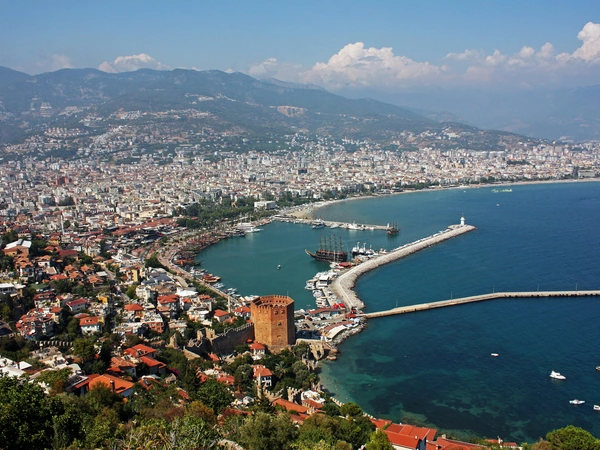
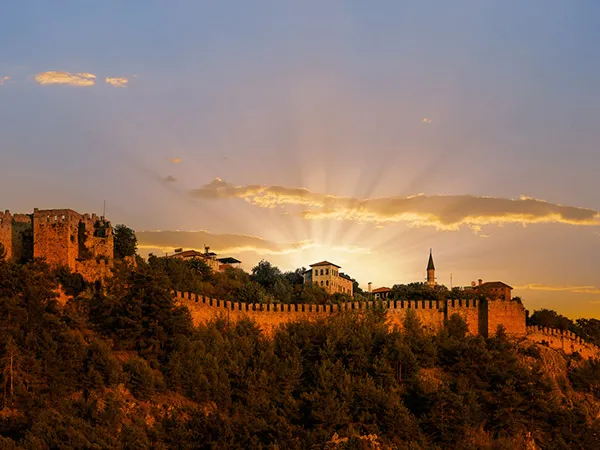
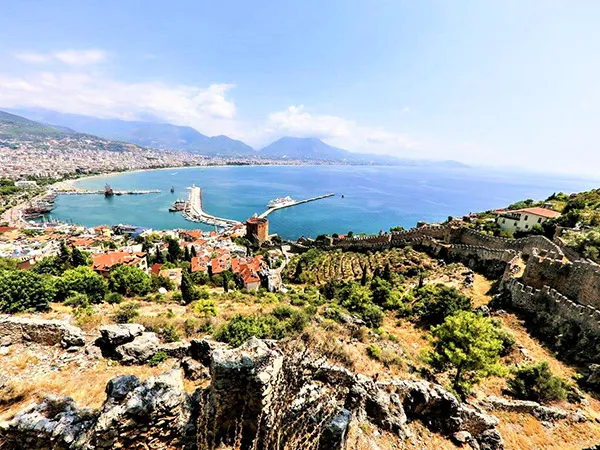
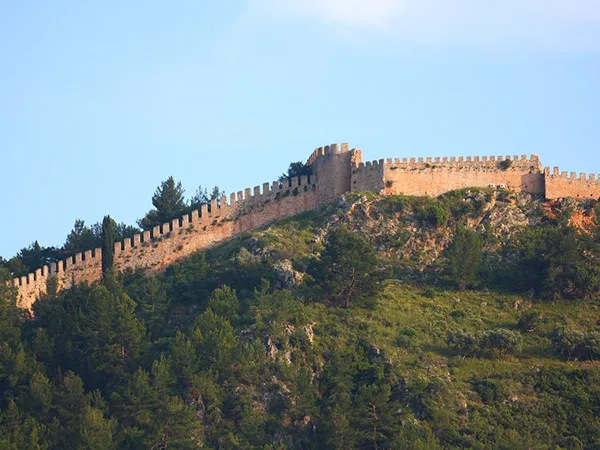
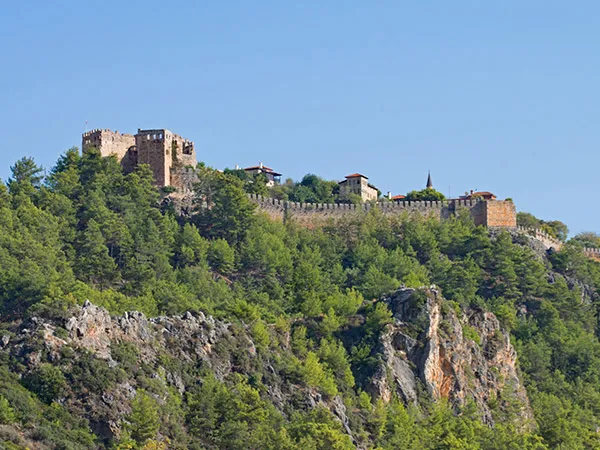
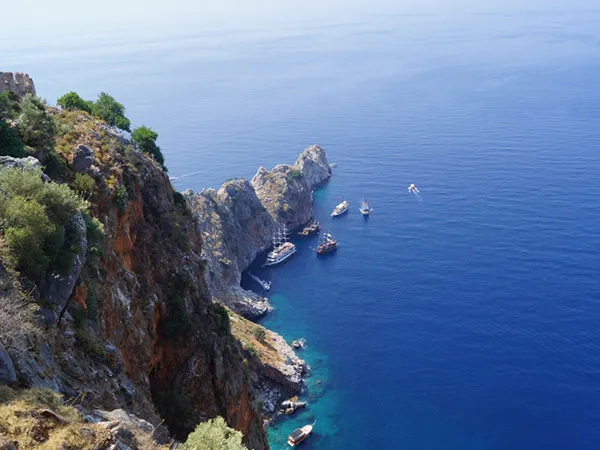
Alanya Castle is one of the most impressive medieval fortifications on the entire Mediterranean coastline. Rising 250 metres above sea level on a rocky peninsula where the Taurus Mountains meet the sea, encircled by 6.5 kilometres of walls, and home to no fewer than six gates and dozens of towers — it is a fortress on a scale that takes time to fully absorb. What makes it genuinely remarkable, beyond its size, is its continuity: this peninsula has been continuously inhabited since at least the 4th century BC. Two neighbourhoods still exist within its walls today.
From Pirates to Sultans
The earliest recorded name for the site is Coracesium, used in the 4th century BC when the promontory served as a base for pirates operating across the Eastern Mediterranean. That era came to an abrupt end in 67 BC when the Roman general Pompey the Great launched his campaign to clear the seas of piracy — the capture of Coracesium is recorded in ancient sources as the defining moment that ended large-scale Mediterranean piracy.
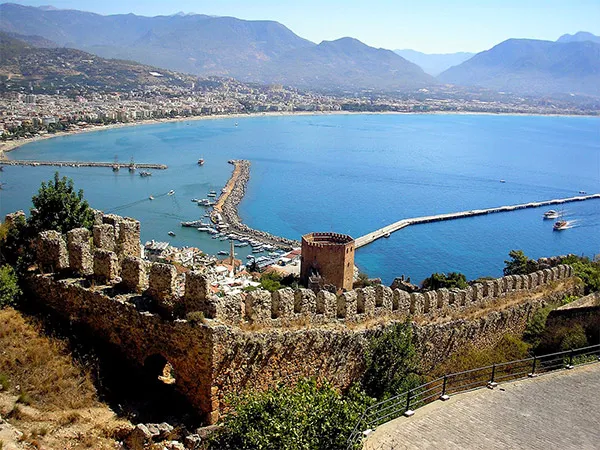
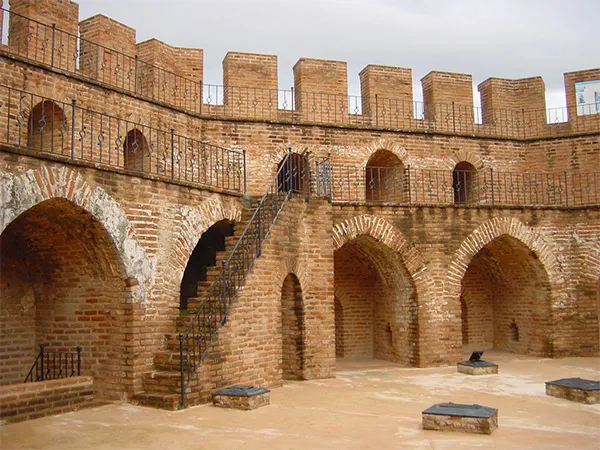
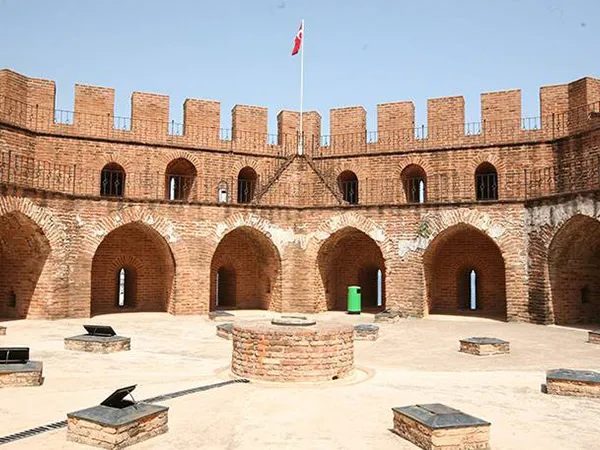
Under Rome and then Byzantium, the city became a episcopal centre of moderate importance. Its defining transformation came in 1221 when Alaeddin Kayqubad I, Sultan of the Anatolian Seljuk Sultanate, took the fortress after a siege. According to legend, the sultan secured the city not by force alone but through a diplomatic exchange with a woman inside the walls, whom he later married. Whether the story is true or not, what Kayqubad did with Alanya is well documented: he renamed it Alaiyye, built the Kızıl Kule, constructed the shipyard, and raised most of the walls visible today. Alanya became the Seljuk Sultanate's winter capital and primary Mediterranean port — the most important harbour between Constantinople and the Levant.
The Structure of the Castle
The castle is divided into three concentric zones: the outer walls, the middle castle, and the İçkale — the innermost citadel at the very summit. This layered defensive system incorporates additions and repairs from across the centuries, making it a kind of physical archive of medieval military architecture.
The cistern system inside the walls deserves particular attention. Designed to withstand extended sieges, these large-capacity water storage structures — some still intact today — demonstrate the sophistication of Seljuk engineering and the strategic thinking that went into the castle's design.
What to See
The İçkale, the innermost citadel at the peak, is now accessible as an open-air museum. Within its walls you can see the remains of the Sultan's Palace, cisterns, barracks, and a Byzantine-era chapel. The site has been made accessible for visitors with mobility limitations.
The Süleymaniye Mosque was built during the reign of Suleiman the Magnificent and sits within the castle walls — one of the most striking examples of Ottoman-era additions to an earlier Seljuk structure.
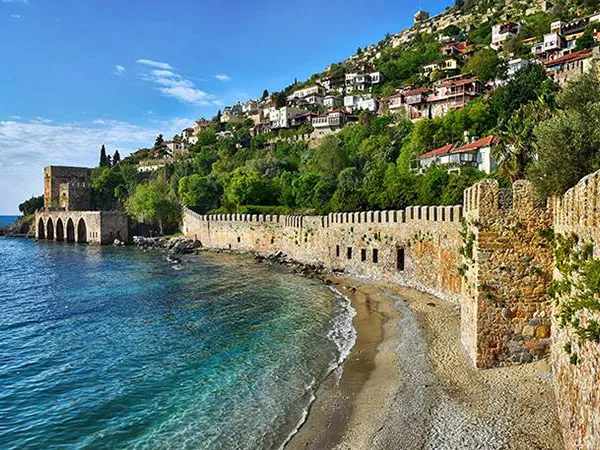
The Tersane is the only surviving original Seljuk shipyard in Anatolia, a five-chambered structure that is partly submerged today and best viewed from the water on one of the boat tours that depart from Alanya harbour.
The Bedesten and Akşebe Tomb are among the other notable surviving structures within the walls, the latter associated with one of the historical figures whose name became embedded in the city's memory.
The Cleopatra Connection
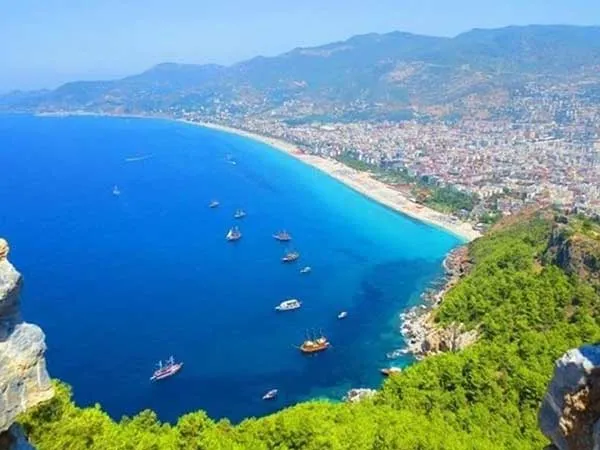
The beach on the western side of the peninsula bears the name of the Egyptian queen. According to legend, Cleopatra and Mark Antony met here, and Antony had sand shipped from Egypt to create a beach worthy of her. Historical evidence for this is thin — though the region's inclusion in territories associated with the Ptolemaic queen is not entirely without basis. Whether believed or not, the legend has proved remarkably durable, and Kleopatra Beach remains one of Alanya's best-known landmarks.
Practical Information
- Location: Alanya district, 133 km east of Antalya city centre.
- Getting there: On foot from Alanya town centre in approximately one hour. By cable car (teleferik), which is significantly faster — note that it closes at 18:00 in winter. By car or taxi; the castle road is open to vehicles.
- Entrance: The İçkale charges an admission fee; MüzeKart accepted. The outer walls and general castle area are largely free to explore.
- Time needed: Allow 3 to 4 hours to cover the full site including the outer walls. The İçkale alone takes around 30 minutes.
- Best time to visit: Sunset from the castle is exceptional — just be aware of the cable car closing time. Early morning is best for avoiding crowds.
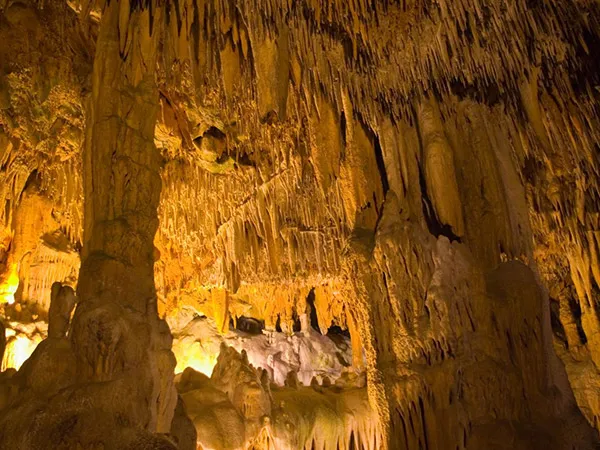
- Combine with: Damlataş Cave and Kızıl Kule can both be visited comfortably on the same day.