
The Fire That Has Never Gone Out
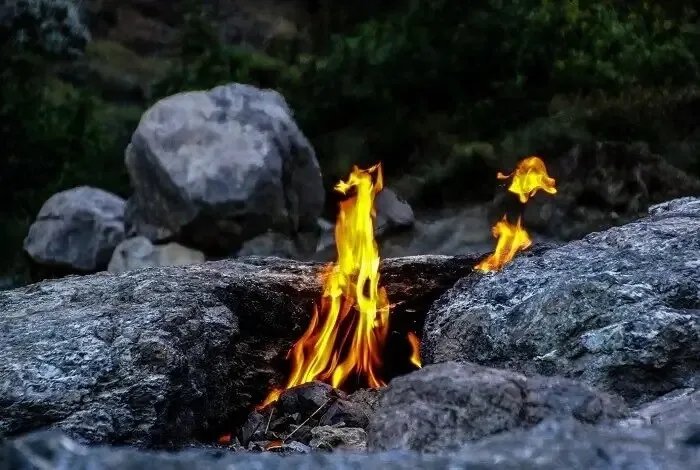
Yanartaş means "flaming stone" in Turkish. On a mountainside above the village of Çıralı in the Kemer district, within the boundaries of Beydağları Coastal National Park, dozens of natural gas vents emerge from the rock and burn. Nobody lights them. Nobody feeds them. They have simply been burning for at least 2,500 years.
Ancient sailors used these flames as navigational markers. Mythology explained them as the breath of a buried monster. Science attributes them to methane gas seeping through fissures in the earth's crust. None of these explanations quite prepares you for standing beside them on a dark night, with the Mediterranean glittering far below and fire rising silently from the rock at your feet.
The Legend: Chimera
The ancient name of Yanartaş is Chimaera — a creature from Greek mythology with a lion's head, a goat's body, a snake's tail, and fire pouring from its mouth. According to the myth, the Lycian King sent a hero named Bellerophon to slay the beast, secretly hoping the monster would kill him instead. The gods took Bellerophon's side: the winged horse Pegasus came to his aid, and together they attacked from above. Bellerophon drove a lead-tipped spear into the Chimaera's throat; the lead melted in the monster's own fire and burned it from within. The Chimaera did not die — it was buried deep beneath the mountain, where its breath still burns today.
The Science: Methane and Ruthenium
The scientific explanation is almost as striking. The fires are fuelled by a mixture of gases — primarily methane — seeping through fissures in ancient metamorphic rock. The igneous rocks beneath the vents are rich in ruthenium, a rare metal that acts as a powerful catalyst for methane formation. The gas emerges across an area of approximately 5,000 square metres. The intensity of the flames varies with groundwater levels and atmospheric pressure — vents tend to burn more strongly after rainfall.
Some vents emit gas without visible flame. These are more dangerous than the burning ones; approaching them, or lighting any fire nearby, is strictly prohibited.
The Temple of Hephaistos
Directly below the flames are the ruins of a temple dedicated to Hephaistos — the Greek god of fire and the divine blacksmith. Roman-era altars and statue pedestals remain visible. Building a sanctuary to the god of fire precisely at the point where fire emerged from the earth was not coincidence; it was theology.
Some historians have proposed that the sacred flame of the ancient Olympic Games was first lit here at Yanartaş. This has not been definitively proven, but the claim is not without basis — and it adds yet another layer to a site that already has more than most.
Day or Night?
Visiting at night is strongly recommended. In daylight the flames appear modest — pale and easily overlooked. After dark, dozens of points of fire scattered across the dark mountainside create an atmosphere unlike anything else in the region. Local vendors heating tea directly over the vents have become an informal part of the experience.
The trail from the entrance to the flames is approximately 1.2 kilometres and takes 30 to 40 minutes. The path is rocky and steep in places; non-slip shoes are essential. A torch or phone light is necessary for a night visit.
Practical Information
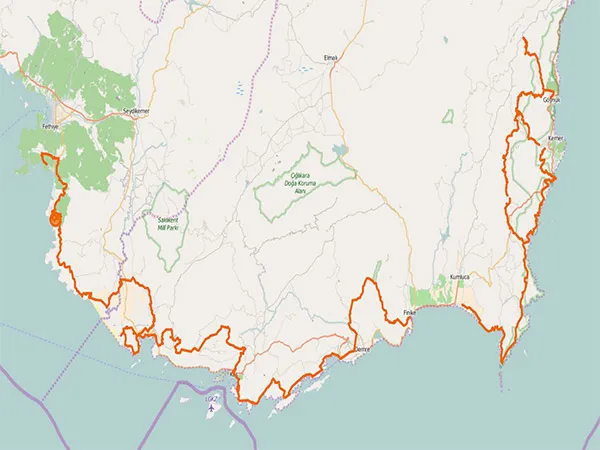
- Location: Ulupınar Mahallesi, Çıralı, Kemer. Approximately 80 km from Antalya city centre.
- Getting there: By minibus from Antalya to Kumluca or Kemer, alight at the Çıralı junction, then taxi or on foot. By car via the D400 toward Kemer, turn at the Çıralı junction and continue approximately 3.5 km.
- Entrance fee: Paid entry; within Beydağları National Park, MüzeKart is not valid.
- Opening hours: Open year-round, including at night.
- Time needed: 1.5 to 2 hours including the return walk.
- Best time to visit: Night or late evening. Spring and autumn are the most comfortable seasons.
- Important: Lighting fires anywhere on the site is strictly prohibited. Do not approach vents that emit gas without visible flame.
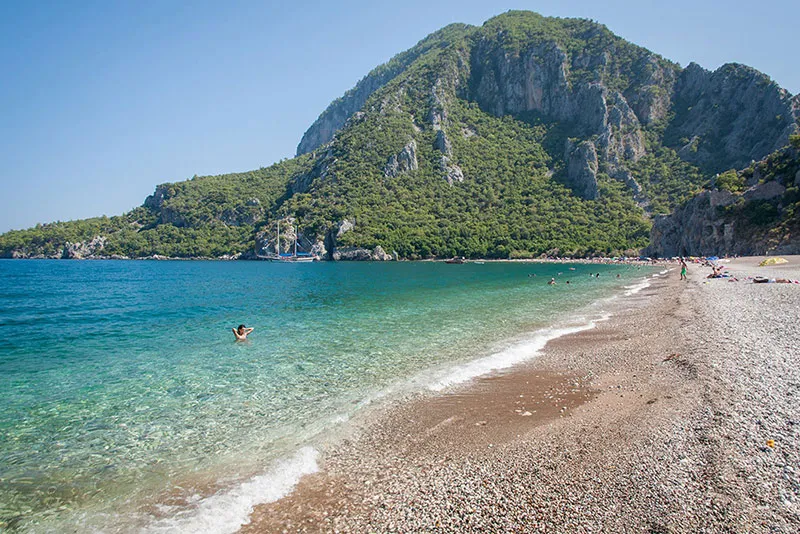
- Combine with: Olympos Ancient City, Çıralı Beach, and the Lycian Way all lie in the same area and make a natural full-day combination.