
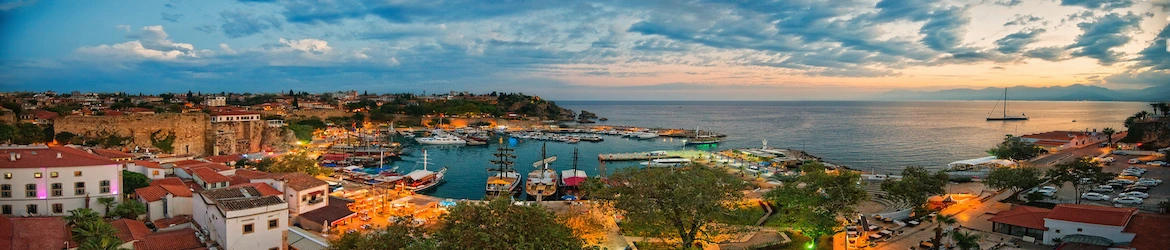
Where is Antalya?
Antalya is a city on Turkey's southern coast, situated on the shores of the Mediterranean Sea where the Taurus Mountains meet the sea. It is located in southwestern Turkey, roughly 700 km south of Ankara and 500 km south of İzmir.
What is the population of Antalya?
As of 2023, Antalya's population is approximately 2.7 million. The city receives over 15 million tourists annually, making it one of the most visited destinations in Turkey and the Mediterranean region.
What is the weather like in Antalya?
Antalya has a classic Mediterranean climate with hot, dry summers and mild, rainy winters. In summer (June–September) temperatures typically reach 30–36°C, while the sea warms to 25–28°C. Winter temperatures range between 10–18°C. The city enjoys around 300 sunny days per year.
What are the main tourist attractions in Antalya?
Antalya offers an extraordinary range of historic and natural highlights. Top attractions include Kaleiçi (the historic old town), Hadrian's Gate, the Antalya Archaeological Museum, Düden Waterfalls, Konyaaltı and Lara beaches, Perge and Aspendos ancient cities, Side, Termessos, Phaselis, and the Köprülü Canyon National Park.
Is Antalya safe for tourists?
Antalya is generally considered one of the safest tourist destinations in Turkey. The city has a strong tourism infrastructure and visible security presence. As with any major city, it is advisable to take standard precautions: avoid poorly lit and deserted streets after dark, keep an eye on your valuables, and stay aware of your surroundings. In an emergency, call 112 (general emergency/ambulance), 155 (police), or 156 (gendarmerie).
What currency is used in Antalya?
The Turkish Lira (TL / TRY) is the official currency. Major hotels, shopping centres and many tourist-facing businesses also accept Euro and US Dollar, though change will be given in Turkish Lira. It is always a good idea to carry some local currency for markets, small shops, and transport.
What language do people speak in Antalya?
Turkish is the official and primary language in Antalya. In tourist areas — Kaleiçi, the beach resorts, and large hotels — English is widely spoken and understood. Given Antalya's international visitor base, German and Russian are also commonly heard, and many hospitality staff speak multiple languages.
When is the best time to visit Antalya?
For beach holidays, June to September offers the best conditions: long sunny days, sea temperatures of 25–28°C, and virtually no rain. For sightseeing, hiking, and a quieter experience, April–May and October are ideal — pleasantly warm weather with fewer crowds. Winter (November–March) is quiet and mild, though some coastal facilities close out of season.
How do I get to Antalya?
Antalya International Airport (IATA: AYT) is one of Turkey's busiest airports, with direct charter and scheduled flights from across Europe, the Middle East, and Central Asia. By road, regular long-distance bus services connect Antalya to Istanbul, Ankara, İzmir, and other major cities. Please note: there are currently no direct rail connections to Antalya — the city is not yet part of Turkey's intercity rail network.
What is the food like in Antalya?
Antalya's cuisine is a wonderful expression of the Mediterranean table: fresh fish and seafood, grilled meats, olive oil-based mezze dishes, piyaz (white bean salad), freshly baked bread, and honey-soaked pastries. The area around Kaleiçi and the waterfront is full of atmospheric restaurants. Don't miss the local speciality kebabs and fresh-caught fish at the harbour-side eateries.
What are the best beaches in Antalya?
The two main city beaches are Konyaaltı (pebbly, close to the city centre) and Lara (sandy, wide, hotel-lined). Further afield, the most scenic and unspoilt beaches include Olympos, Çıralı (loggerhead turtle nesting site), Adrasan, Kaputaş (dramatic cliff-face beach), and Patara (one of the longest in Turkey). For warm and calm swimming the longest season is found around Alanya.
Can I drink tap water in Antalya?
Tap water in Antalya is not recommended for drinking. Bottled water is widely available and inexpensive throughout the city. Larger hotels may have filtered water systems — check with reception if unsure. It is fine to brush your teeth using tap water.
Are there cultural festivals in Antalya?
Antalya hosts a rich calendar of events throughout the year. The Antalya Golden Orange Film Festival (held each October) is Turkey's most prestigious and longest-running film event. Other highlights include the Antalya Piano Festival, open-air classical music and theatre performances at ancient sites such as Aspendos, and various summer music events along the coast.
What are the best day trips from Antalya?
Antalya makes an excellent base for day trips. The most popular include: Perge Ancient City and Aspendos Theatre (both within 50 km), Side Ancient City and museum, Saklıkent Gorge, Köprülü Canyon (great for rafting), Demre and the Myra rock tombs, Kaş and the Lycian coast, and Çıralı. Most can be reached independently by car or via organised tours departing daily from the city centre.
What is the nightlife like in Antalya?
Antalya's nightlife scene varies considerably by area. Kaleiçi (the old town) is the most atmospheric, with rooftop bars, jazz venues, and lively terraces tucked among the Roman ruins. Kemer, along the coast, has a younger and more energetic beach-club scene. Alanya is known for its long summer season and vibrant bar street. For those seeking a quieter resort experience, Belek's large hotels offer entertainment options within their own grounds.
Where are the best places to shop in Antalya?
Kaleiçi Bazaar is the best spot for leather goods, jewellery, spices, and souvenirs. For international brands and modern retail, Terra City and Antalya Migros (5M) are the main shopping centres. Local weekly markets (pazarlar) in residential neighbourhoods are excellent for fresh produce, olives, cheeses, and textiles — a more authentic and affordable experience.
Are there theme parks or entertainment attractions?
Yes. Land of Legends Theme Park (in Belek) is one of Turkey's largest, combining a theme park, water park, and hotel resort in a single complex. Aqualand Water Park is closer to the city centre and great for families. Antalya Aquarium — home to Turkey's longest underwater tunnel — is a popular attraction especially well-suited for children.
Can I use my credit card in Antalya?
Credit and debit cards are widely accepted in Antalya — hotels, restaurants, shopping centres, and most tourist-facing shops accept Visa and Mastercard. American Express is accepted in larger establishments. For smaller local shops, street vendors, markets, and some restaurants in the old town, it is advisable to carry cash. ATMs are available throughout the city on a 24/7 basis.
What are the transport options in Antalya?
Antalya has a good public transport network. AntBüs (municipal buses) and Antray (tram/light rail) cover most of the city — both use the Antalyakart contactless card, available from machines at major stops. Taxis are plentiful; always check that the meter is running. Car hire is widely available at the airport and in the city. For the beach strip and Kaleiçi, walking is often the most convenient option.
Do I need a visa to visit Turkey?
Whether you need a visa depends on your nationality. Citizens of many European countries, the USA, and several others can enter Turkey visa-free for up to 90 days within a 180-day period. Nationals of other countries may need to apply for an e-Visa online before travelling — the process is quick and straightforward. For the most current and accurate information, visit the official Turkish e-Visa portal at evisa.gov.tr or contact your nearest Turkish consulate.
What should I do in an emergency?
The following emergency numbers are active across Turkey, including Antalya: 112 — General Emergency / Ambulance, 155 — Police, 156 — Gendarmerie (rural areas), 110 — Fire Brigade. Antalya has several well-equipped hospitals and private medical clinics. It is strongly recommended that you arrange comprehensive travel insurance before your trip, covering medical treatment, repatriation, and personal belongings.